
Introduction to Low Density Polyethylene (LDPE) Film Test
Den Low Density Polyethylene (LDPE) film test plays a critical role in assessing the frictional properties of LDPE films, which are commonly used in packaging applications. Testing the Friktionskoefficient (COF) of these films ensures that they meet industry standards for slip resistance and durability. The COF of a material is a measure of the resistance it encounters when sliding over another surface. In the context of LDPE films, this test is essential for understanding how the films will perform in real-world conditions, such as packaging, transport, and storage.
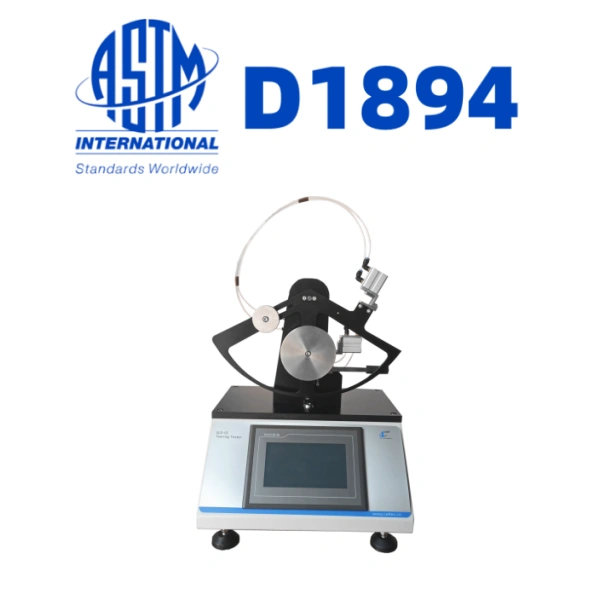
Coefficient of Friction Test Method for LDPE Films
Den Testmetode for friktionskoefficient is a standardized procedure for determining the frictional properties of LDPE films. These tests help manufacturers and quality control personnel measure both static and kinetic friction coefficients, which are vital in ensuring the smooth functioning of packaging lines and machines.
Static and Kinetic Friction Test Methods
- Statisk friktionstest:
The static coefficient of friction is measured when the LDPE film is stationary and a sled is pulled across its surface. This test determines the force required to initiate movement. It is important for understanding the initial resistance a film will have when it starts moving. - Kinetisk friktionstest:
The kinetic coefficient of friction is measured while the film is in motion. This test evaluates the ongoing resistance as the film slides over a surface. Since the kinetic friction is typically lower than static friction, this value is crucial in assessing the ease of movement and processing efficiency of the film.
Role of the Kinetic Friction Tester and Static Friction Tester
To measure the friction coefficients accurately, kinetic friction testers og static friction testers are employed. These devices help measure the frictional forces that occur when a material slides over another surface.
- Kinetic Friction Tester: Used to measure the kinetic coefficient of friction, this device ensures that the film can move smoothly during packaging and handling operations.
- Static Friction Tester: Measures the static coefficient of friction, which is essential for determining how well the film can be handled before it starts sliding. High static friction could cause blockages or difficulties in machine operations.
Why Coefficient of Friction Testing Matters
Understanding the Friktionskoefficient of LDPE films is crucial for several reasons:
- Improved Packaging Efficiency: Packaging machines rely on the smooth flow of films to ensure efficient processing. Low friction films are easier to handle and transport, reducing the likelihood of snags or jams.
- Quality Control and Consistency: By measuring the COF, manufacturers can maintain consistency in their film production, ensuring that each batch meets the desired standards for performance.
- Slip Resistance in Storage: Films with a higher static friction coefficient are more likely to stick together in rolls or sheets. Conversely, films with low static friction are easier to separate, which is essential for handling and storage.
- Industry Standards Compliance: Testing the COF ensures that the LDPE film complies with industry standards such as ASTM D1894-24. This standard outlines the test methods for both static and kinetic friction, ensuring consistency and reliability.
The Testing Procedure
The testing process involves preparing the LDPE film samples and conducting tests under controlled conditions:
- Forberedelse af prøver:
The film is cut into specific sizes, usually 250mm x 130mm, ensuring uniformity in the testing process. The film is carefully taped onto a horizontal plane or sled, ensuring that it remains wrinkle-free to avoid inaccurate results. - Testing Apparatus:
The testing apparatus includes a slæde, a plane, and a force-measuring device. The sled is moved over the surface of the film, and the force required to initiate and maintain motion is measured. The speed at which the sled is moved is typically set to 150 ± 30 mm/min to ensure consistency in results. - Temperature Control:
The tests are usually performed at 23°C with a relative humidity of 50 ± 10%. However, the test can be adapted for higher temperatures, which might be relevant in some packaging environments. - Calculations:
The static and kinetic friction coefficients are calculated using the recorded force values and the weight of the sled. The formula for the static coefficient of friction (μ_s) is: μs=BAs where As is the initial motion scale reading and B is the sled weight. Similarly, the kinetic friction coefficient (μ_k) is calculated by measuring the average force during uniform sliding.
Coefficient of Friction Testing Labs
For accurate and reliable testing, it’s essential to have access to coefficient of friction testing labs equipped with the right tools and expertise. These labs provide the necessary equipment and environment to perform friction tests according to ASTM D1894-24 standards. Additionally, they offer valuable insights into the performance of LDPE films and help companies meet industry regulations.
Konklusion
Den Low Density Polyethylene film test is a crucial step in evaluating the frictional properties of films used in packaging. By measuring the Friktionskoefficient using a kinetic friction tester and a static friction tester, manufacturers can ensure that their films meet the necessary standards for smooth processing and handling. Understanding these properties not only enhances production efficiency but also ensures the quality and reliability of the films in real-world applications.
For businesses looking to improve their material testing capabilities, Cell Instruments Co., Ltd. offers advanced coefficient of friction testers that comply with ASTM standards and provide accurate, reliable results for LDPE film testing. By leveraging high-quality testing equipment, companies can ensure that their products meet the highest standards of performance and safety.
 DA
DA  EN
EN  AR
AR  BG
BG  CS
CS  DE
DE  EL
EL  ES
ES  ET
ET  FI
FI  FR
FR  HU
HU  ID
ID  IT
IT  JA
JA  KO
KO  LT
LT  LV
LV  NB
NB  NL
NL  PL
PL  PT
PT  RO
RO  RU
RU  SK
SK  SL
SL  SV
SV  TR
TR  UK
UK